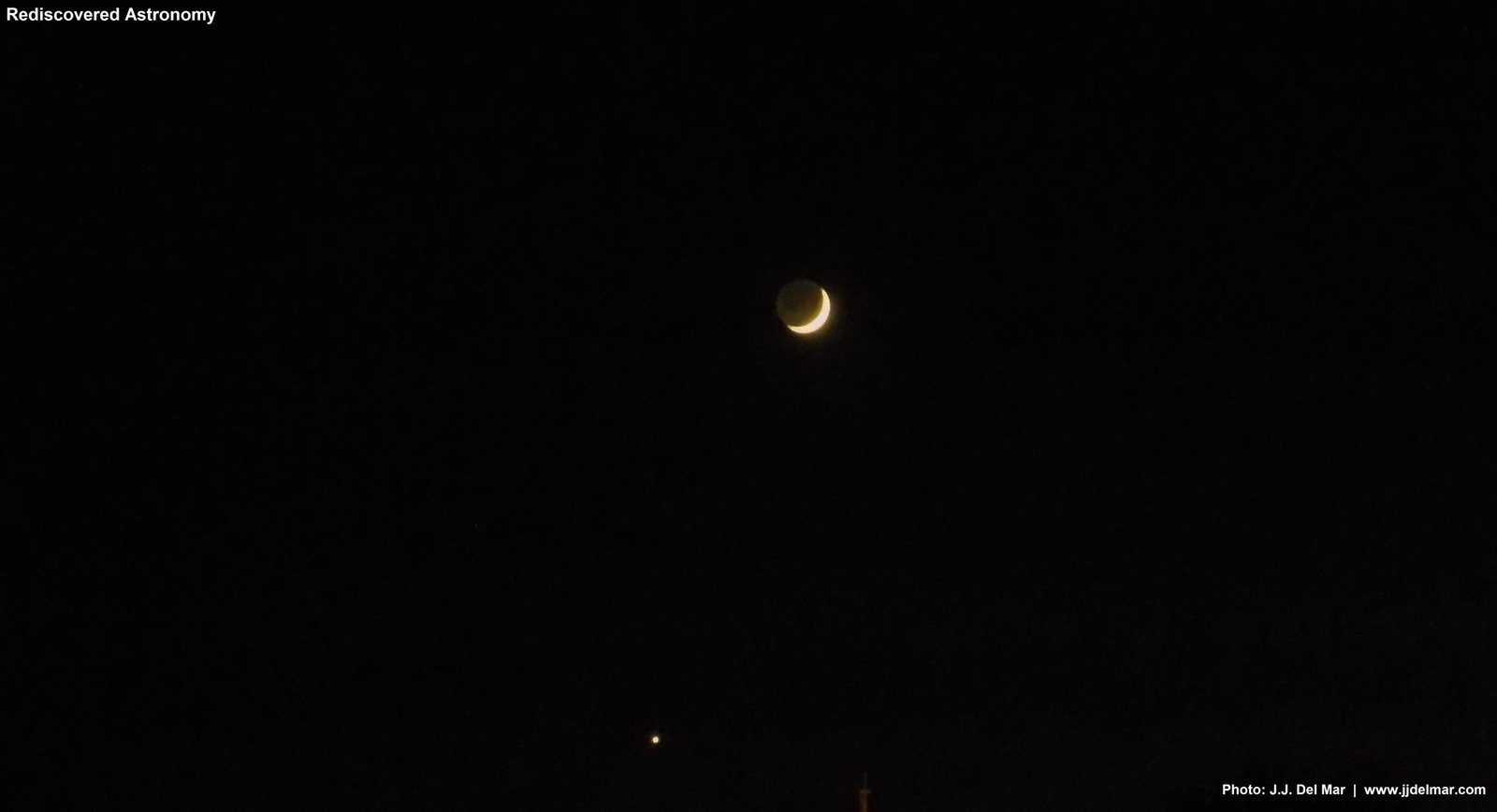
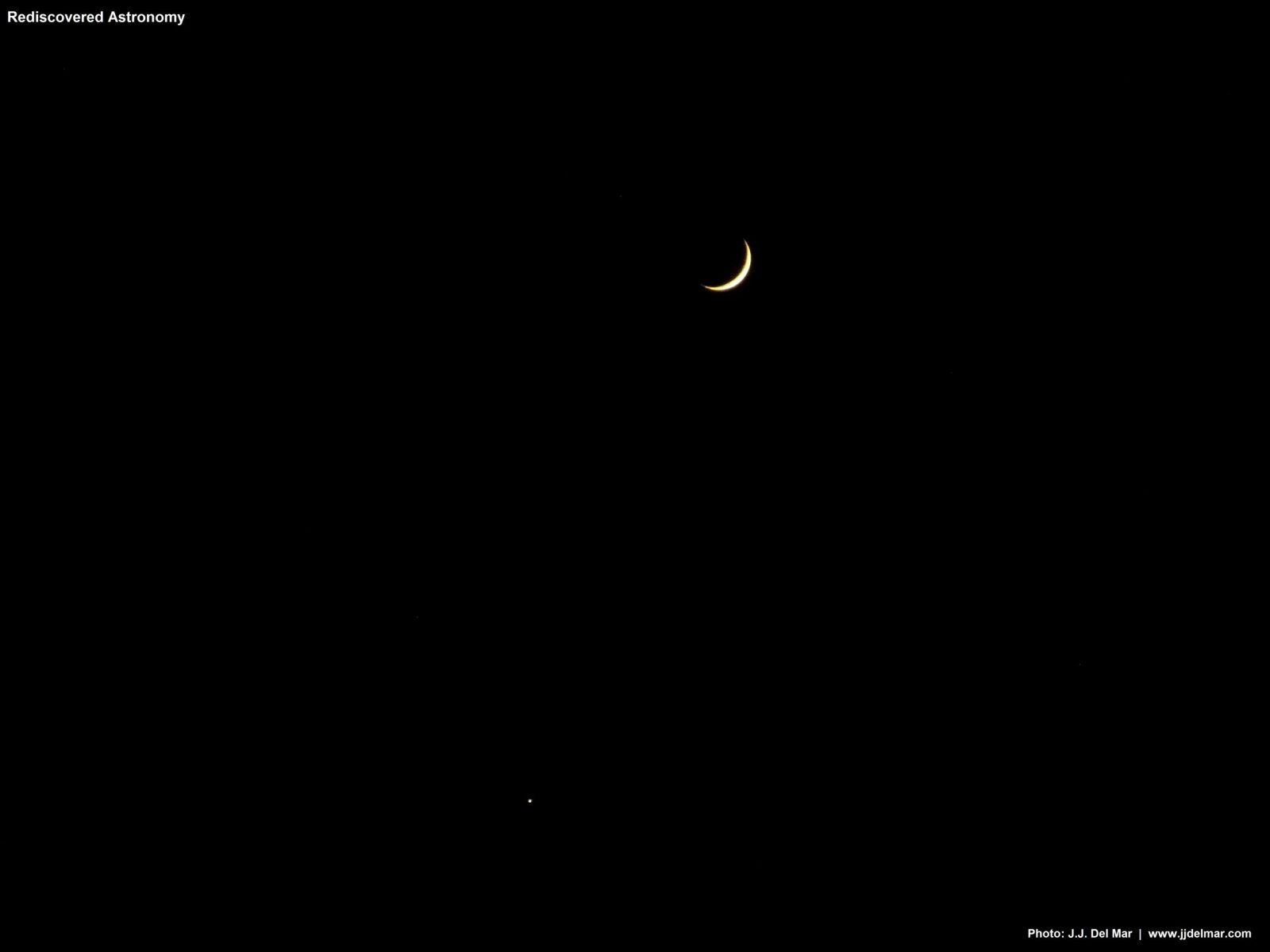
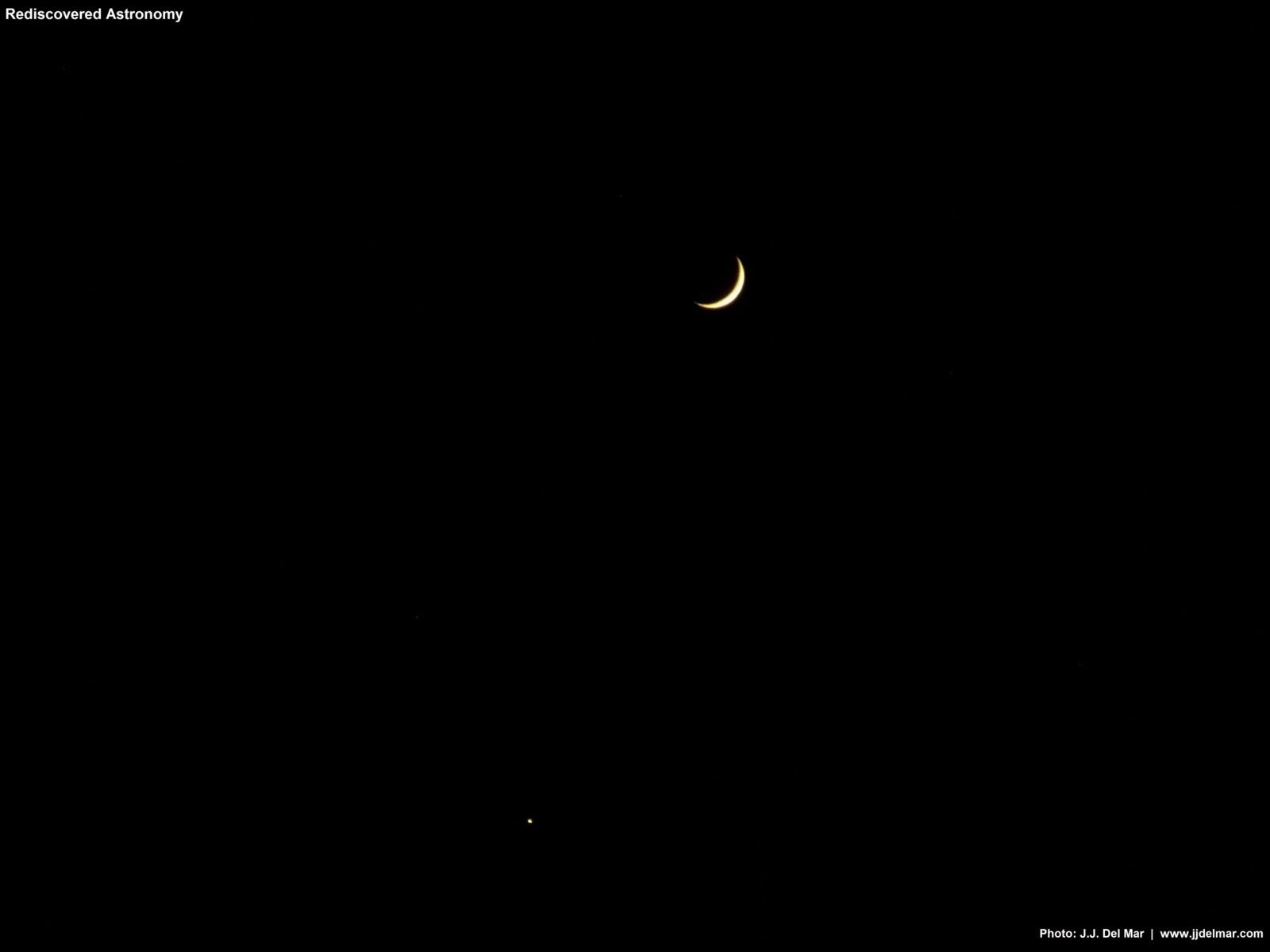
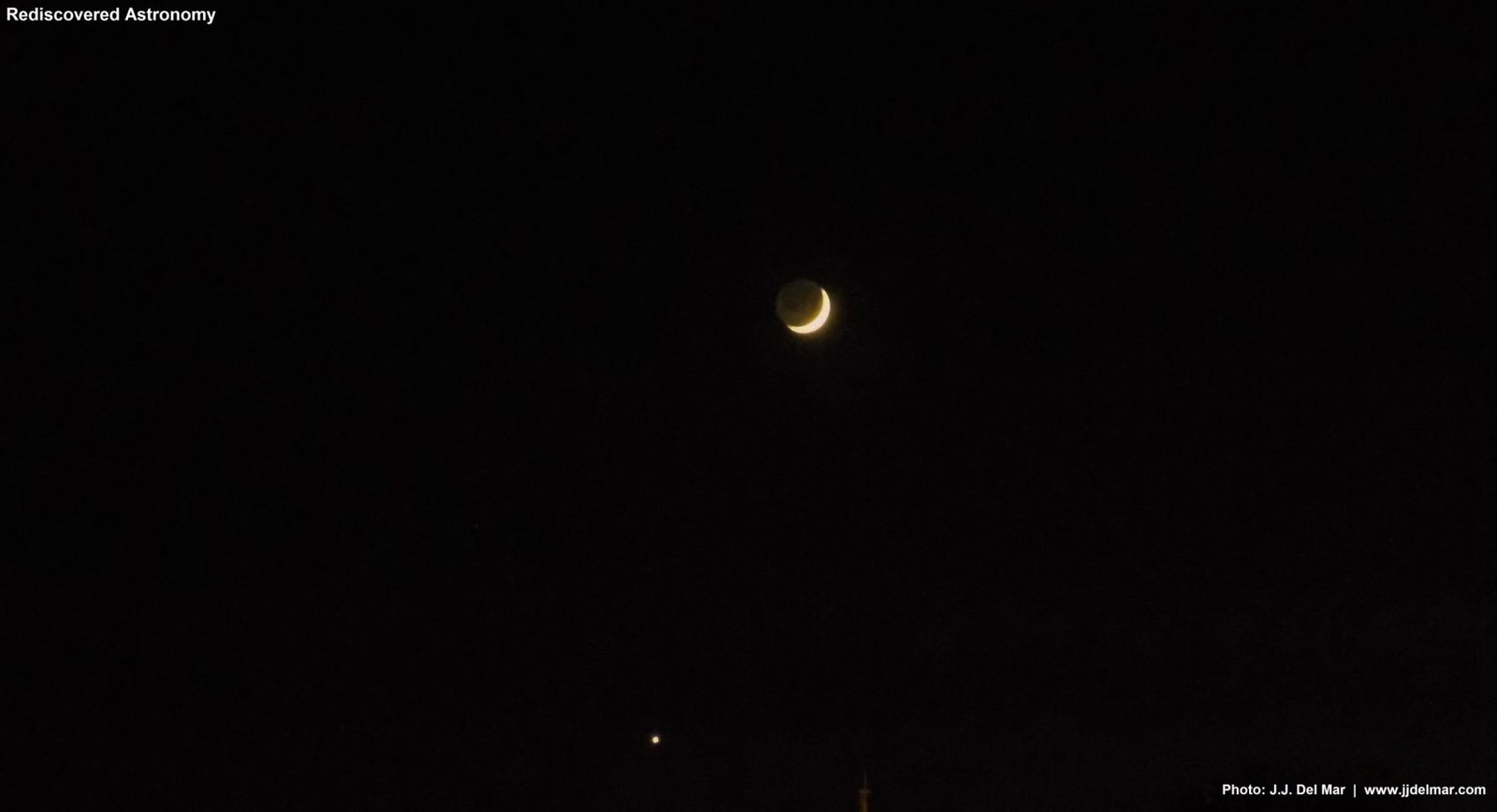
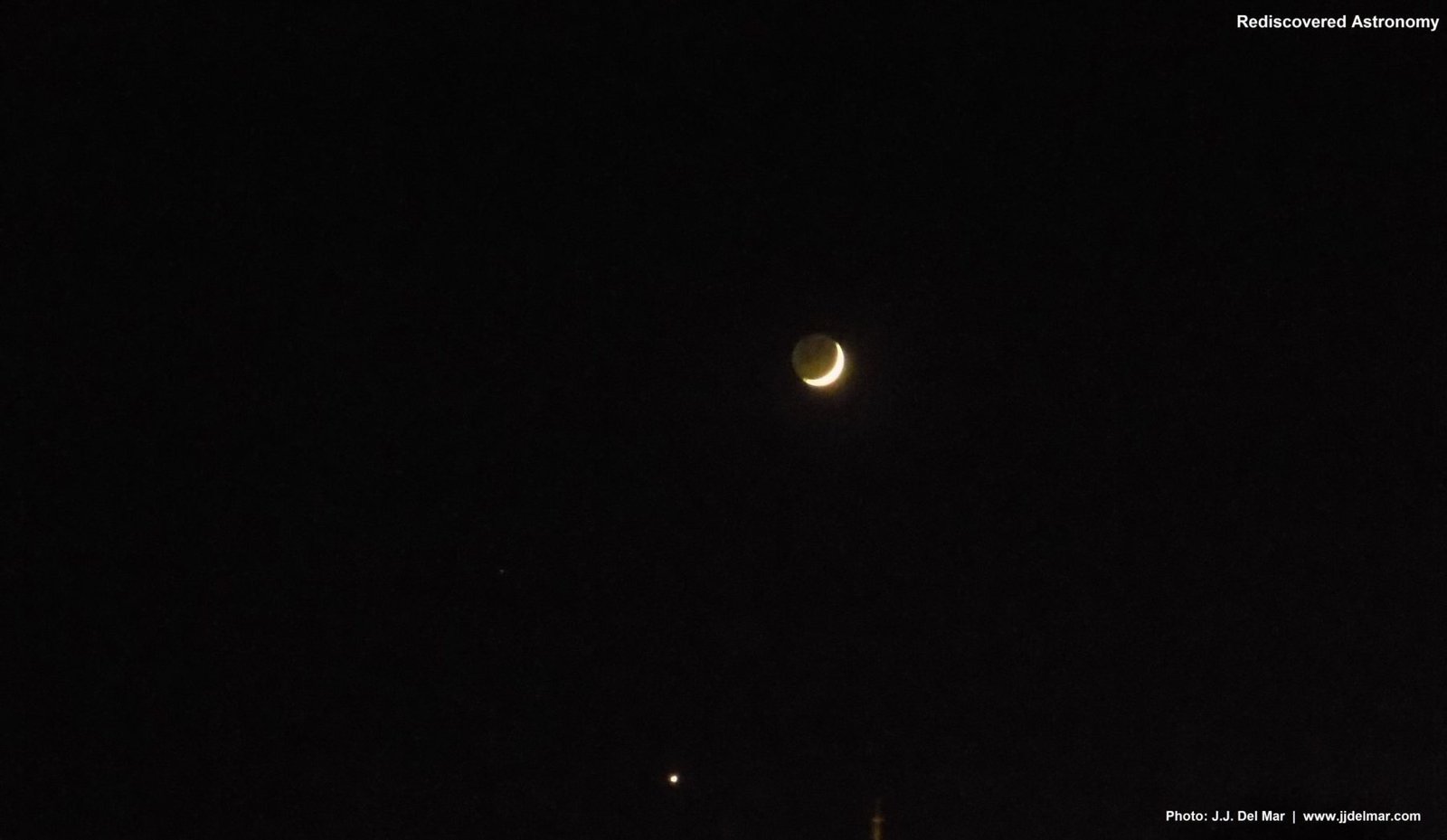
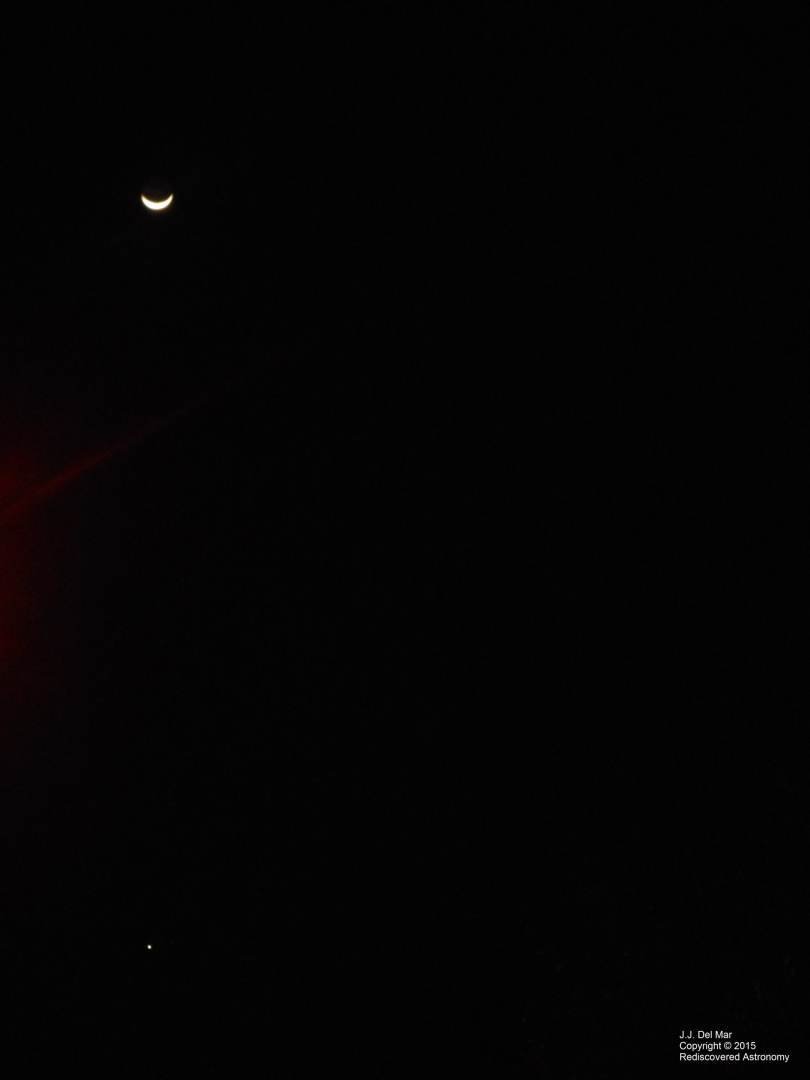
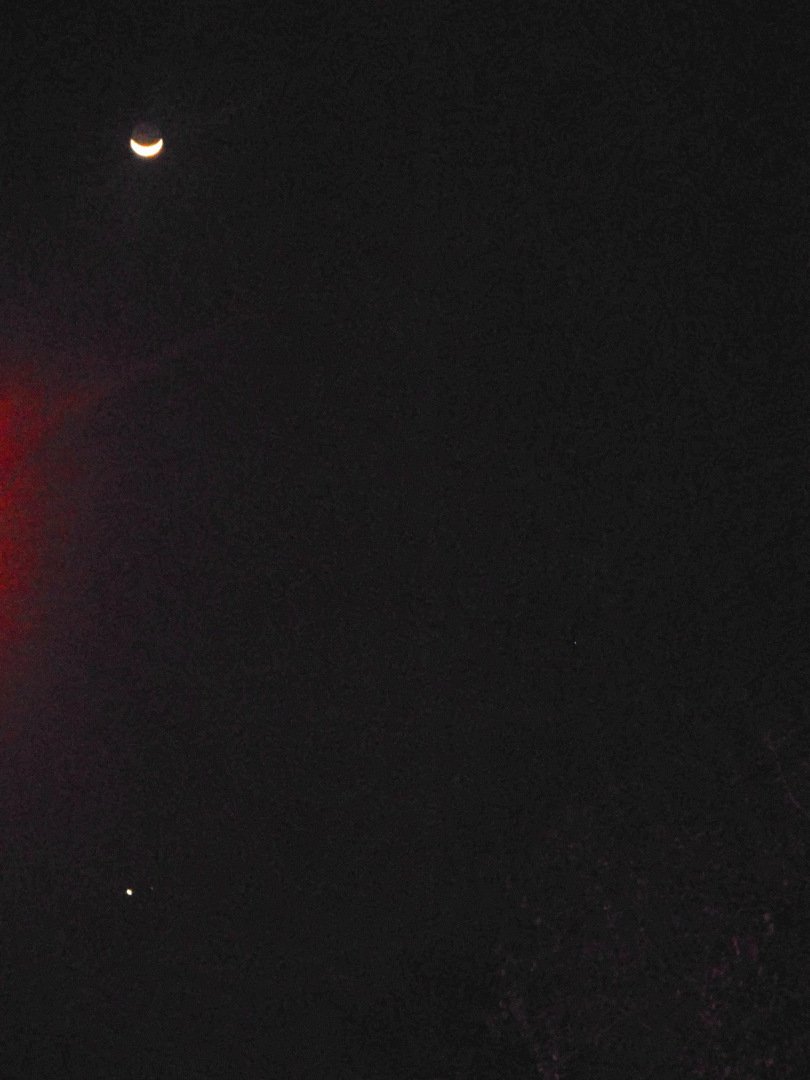
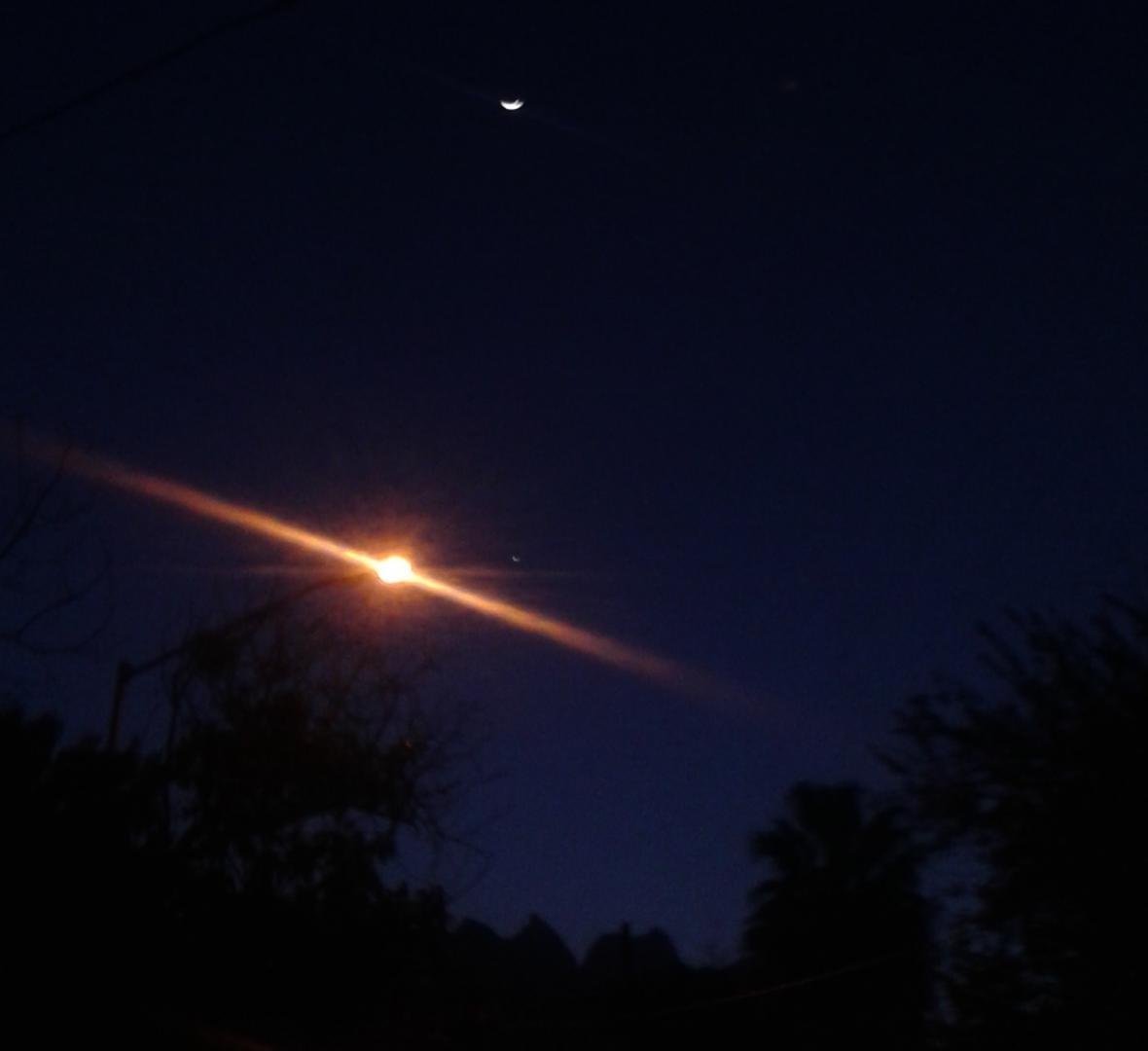
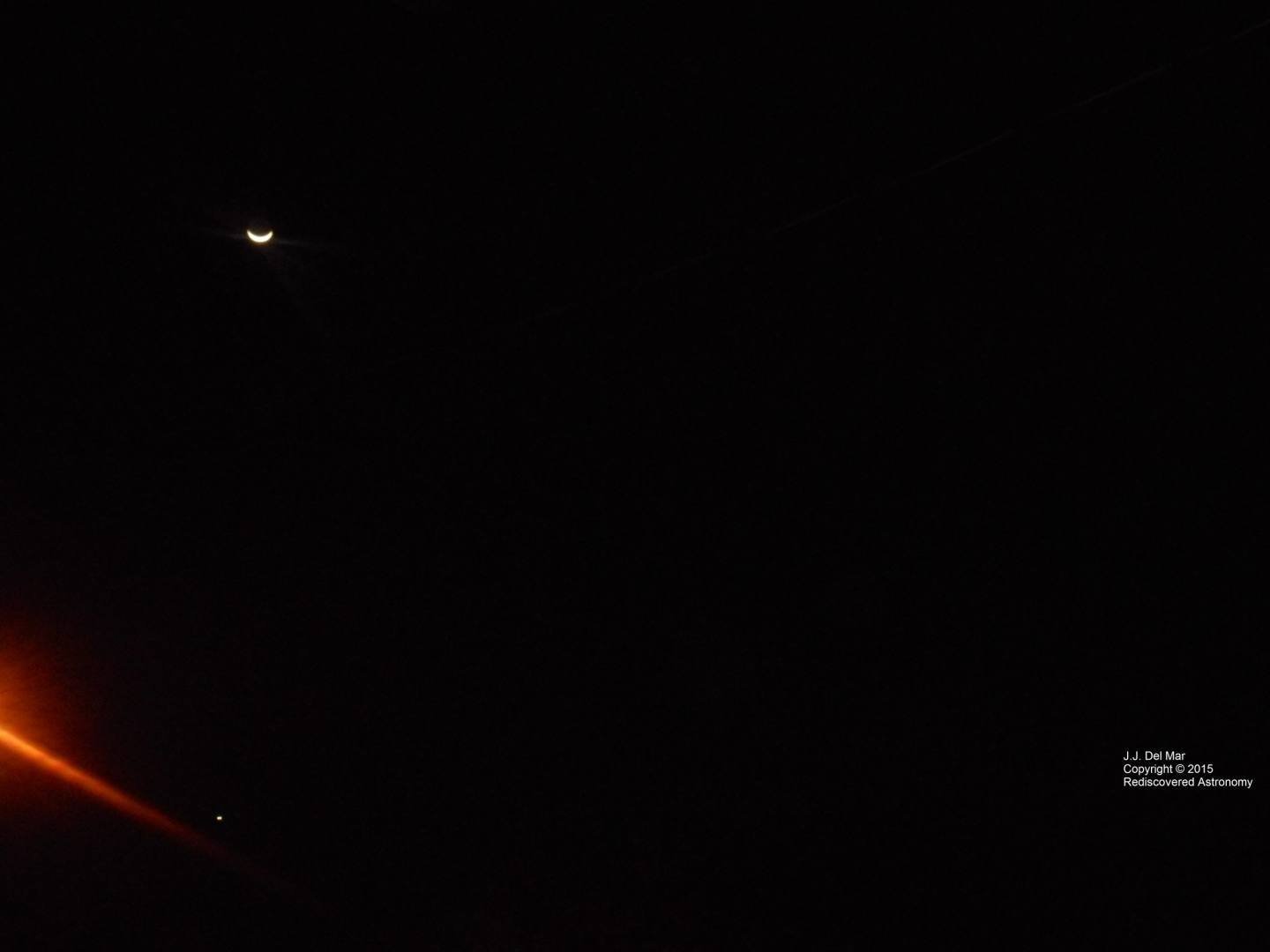
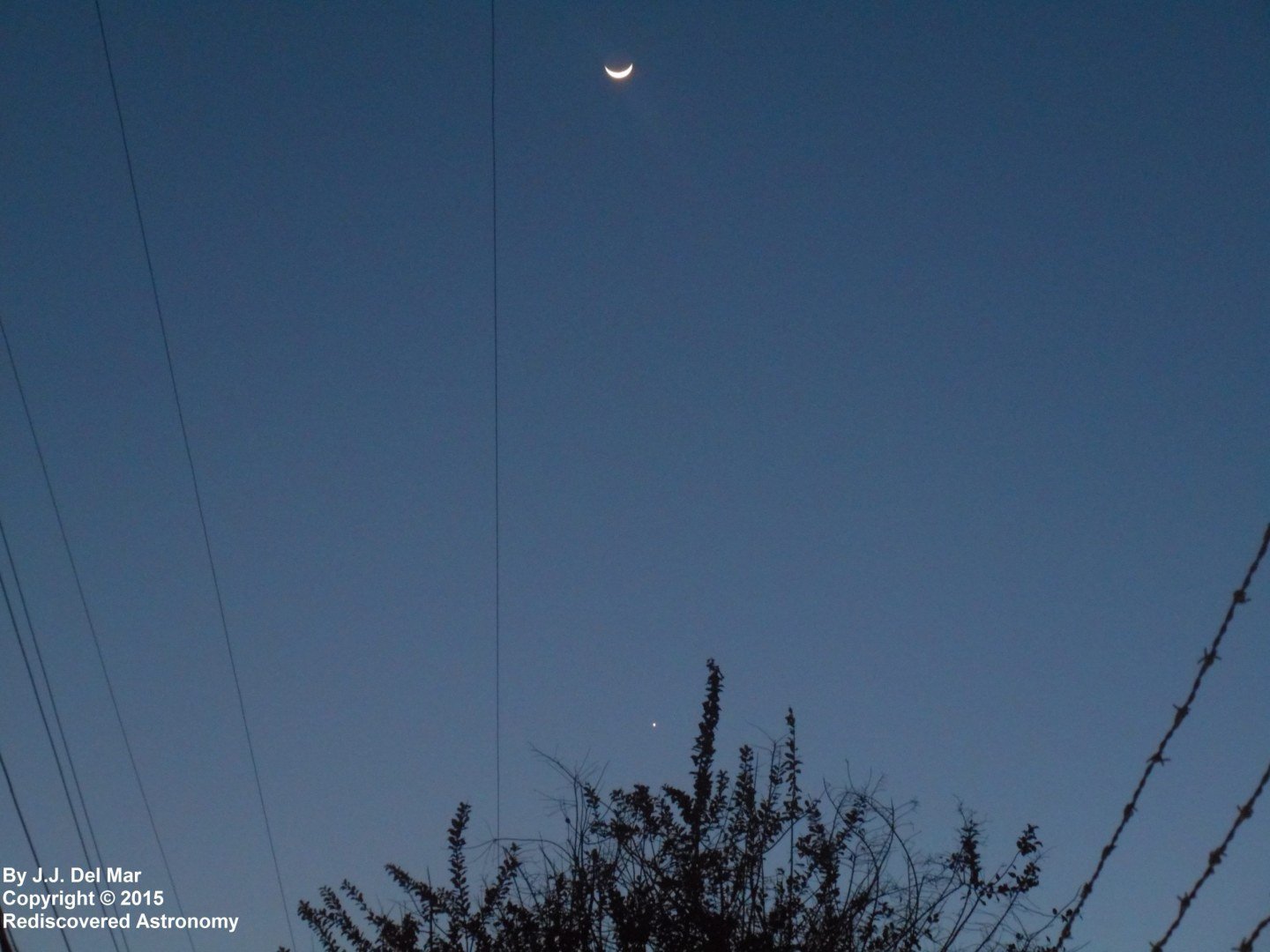
This week we see Venus in the western sky in apparent proximity to Luna on October the 3rd. Later in the week, on October 5th, the Moon will move to appear close to Saturn in the west.
Rediscovered Astronomy releases animations of the planets in our solar system.
Well, we are meeting our goal of releasing the animations of the planets in our solar system three months ahead of schedule.
The animations of the main 8 planets have been uploaded. We will upload animations of smaller bodies and dwarf planets later. The animations were created in collaboration with J.J. Del Mar.
For use and license please see each planet page. You can visit the animations main page here:
The next is a series of photos taken on July 17, 2015. The three orbs put on a beautiful display around sunset that day (7-17-2015) and the following day as well.
Well, the month of July is passing by and the planets Jupiter and Venus are getting apart in the western sky.
Last June 30th, we watched as the two planets entered the closest conjunction not seen since about 2000 years. We took photos of Jupiter and Venus on June 29th and before that, but we unfortunately missed the closest point due to cloud cover at our location.
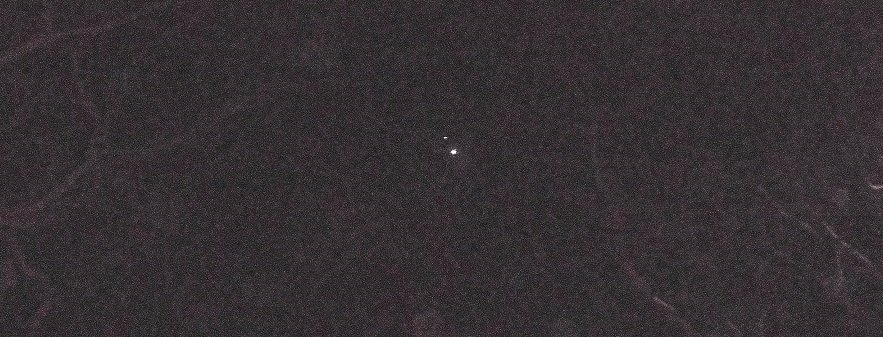
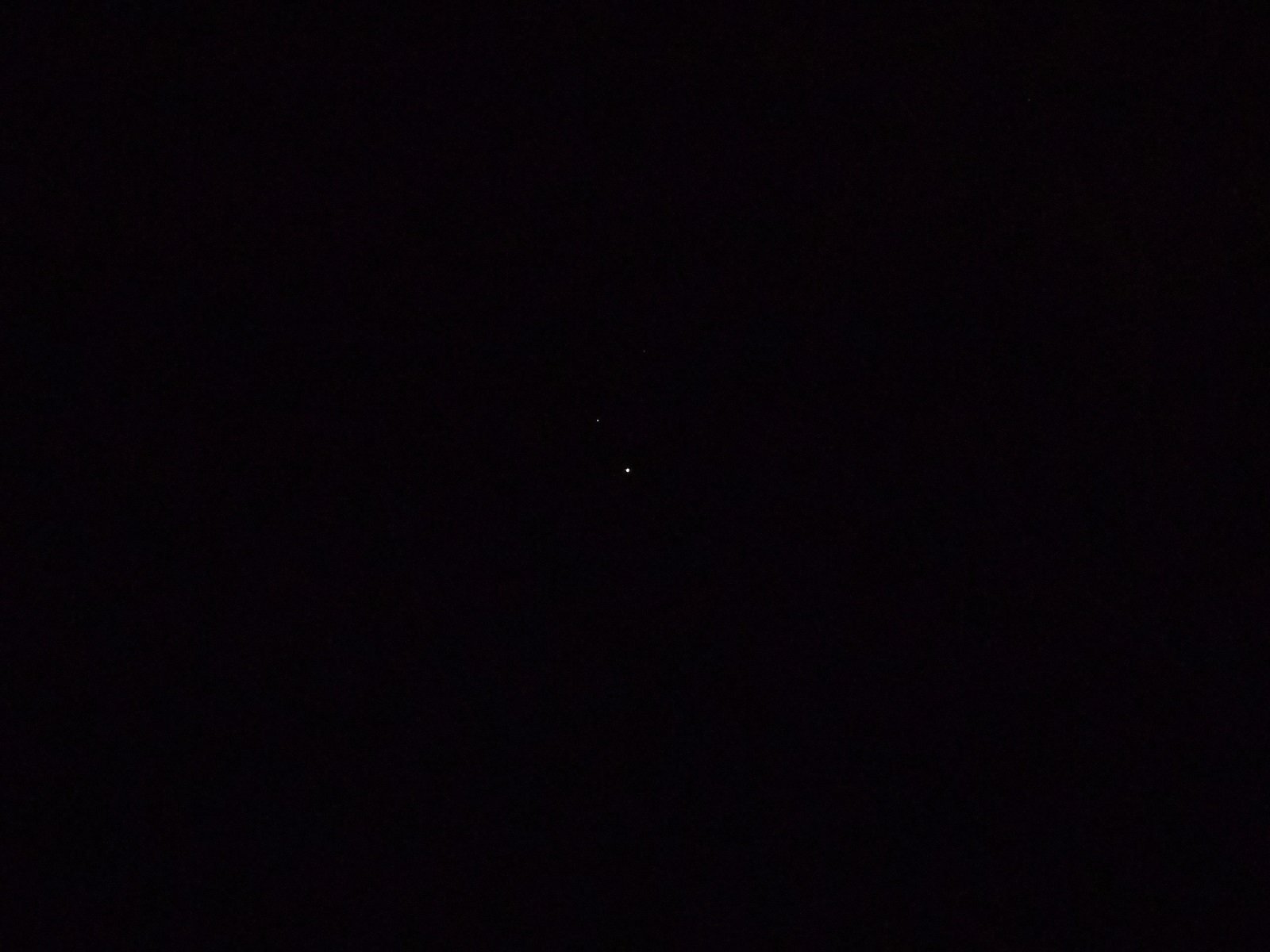
Here are the photos of Jupiter and Venus conjuction.
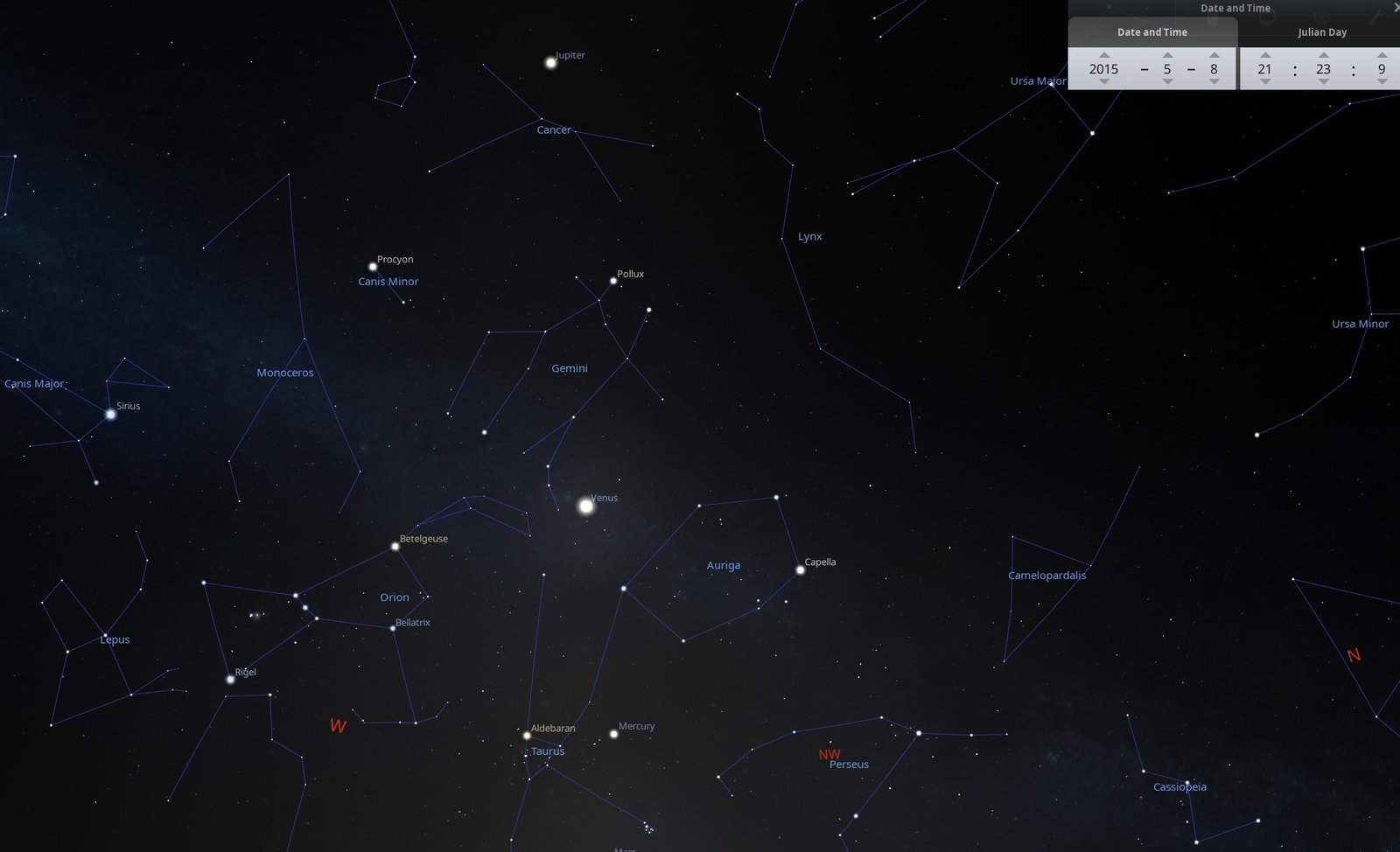
This May 2015 the planets Mercury, Venus and Jupiter will be in near alignment with each other. From Earth’s perspective, the alignment will be visible to the West after sunset. Mercury and Venus are in close alignment and Jupiter is a little off to the left and above Venus.
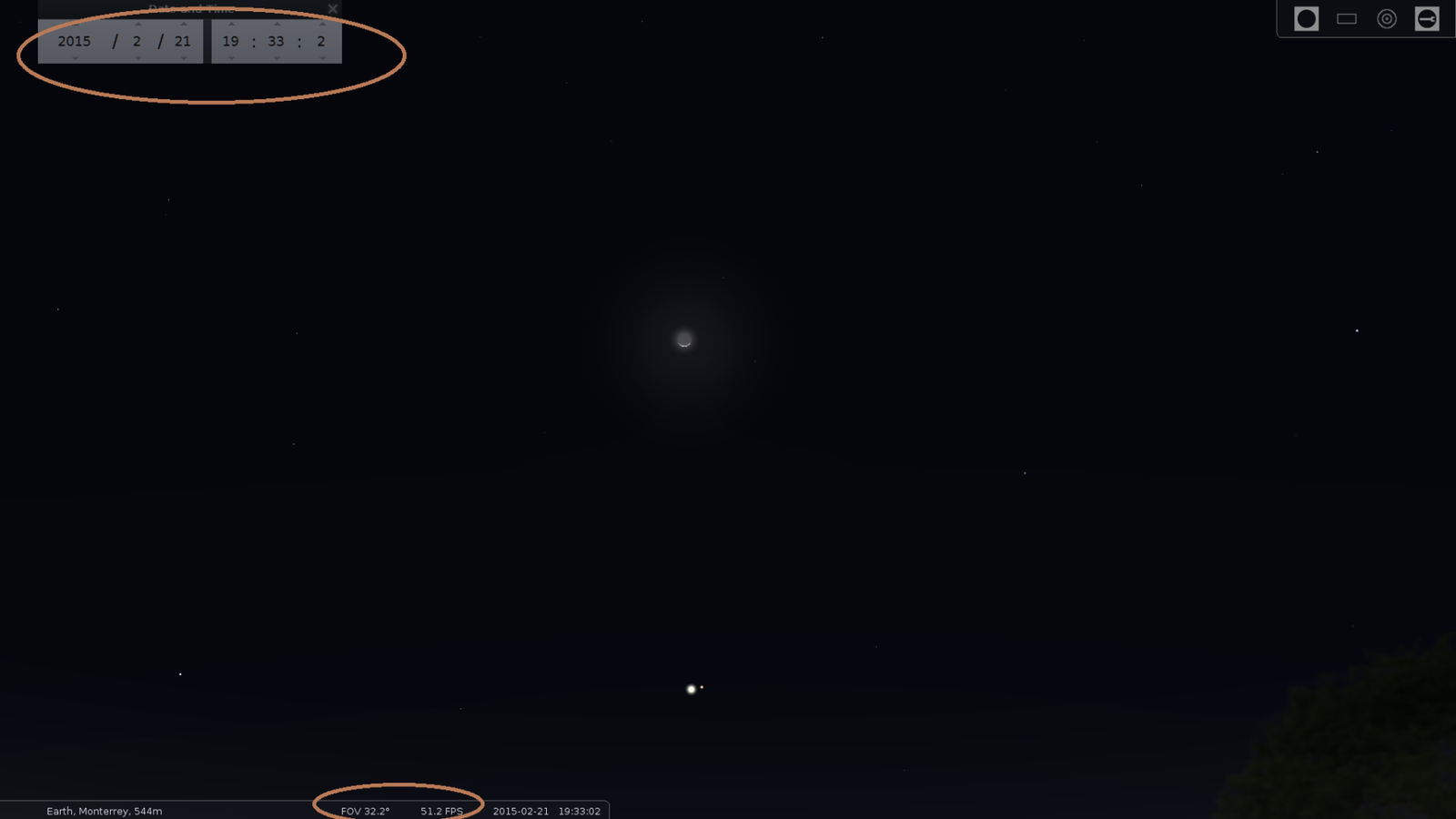
Moon, Venus, Mars – Conjunction | February 21, 2015
The conjuction of the Moon, Venus, and Mars was highly photographed this February on the 20th of the month and on following days the two planets keep shining in the same area of the night sky. However, on Friday, February 21, 2015 the bright Venus did not allow us to see Mars, too faint in the night sky. It appeared as an occultaion of Mars by Venus to the naked eye.
But we have said before that the interested observer does not need expensive equipment or fancy telescopes to see events like this month’s conjuction. From the use of a simple cellphone to the aid of a pair of binoculars, the night watcher could equally enjoy the view all he/she needs is to know where to watch.
So we set up last week to see the conjuction with different devices you may already have.
Moon, Venus, Mars – Conjunction
We looked to the West to see the conjuction and took photos with a simple smartphone, Samsung Galaxy. We tried the various settings included with the phone’s camera with different results.
The same as with the naked eye, Venus did not allow us to see Mars with the smartphone camera, but overall the Moon and Venus below it looked sharp.
We first tried the compact Nikon 3600 camera [really unexpensive and cheaper than most smartphones] by using the video camera mode. We just panned and zoomed up to 3x then up to 4x [out of the 6x maximun] to simulate what the naked eye could see. We shot the Moon, Venus, and Mars to the West.
We got a bonus by looking to the East and capture Jupiter on the same take. The use of any video camera would give similar results.
As with the smartphone camera, we tried different settings of the compact Nikon 3600. The following are unedited full resolution images.
We adjusted the exposure of some of the photos to discover Mars.