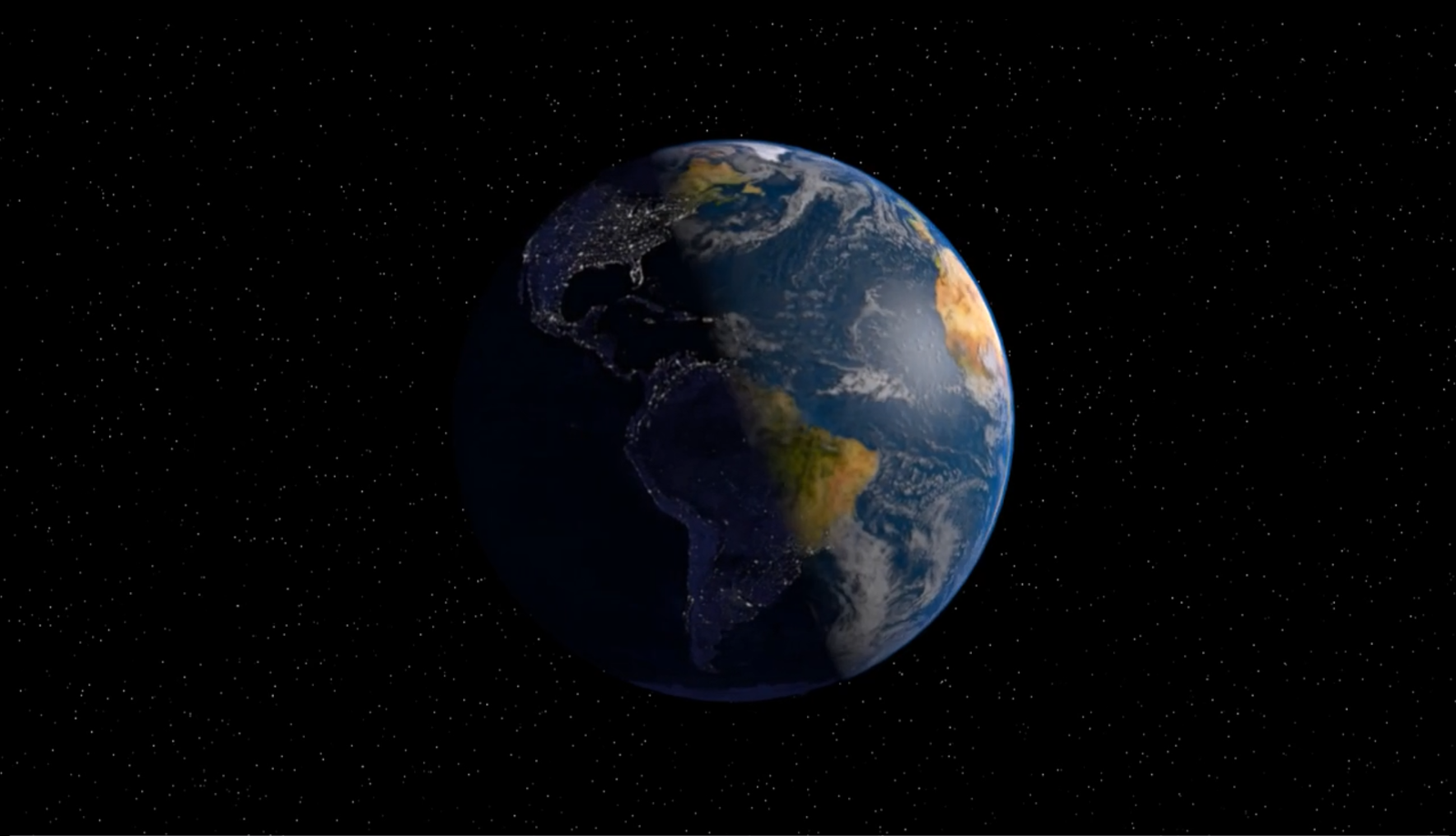
Earth rotation animation was created by J.J. Del Mar for Rediscovered Astronomy. Enjoy this awesome CGI display of Earth’s rotation. We will be posting animations for all the planets in our solar system.
Earth Rotation Animation by J.J. Del Mar | Rediscovered Astronomy May 2015
Instead of using other animator’s method, I researched and studied to create my own method which has greatly improved the result. I will use my own method with enhanced textures to create more realistic animations. Rediscovered Astronomy will publish these animations of the Solar System in 2016.
– J.J. Del Mar
You can find the animations of all the planets in our solar systems right here on our website.
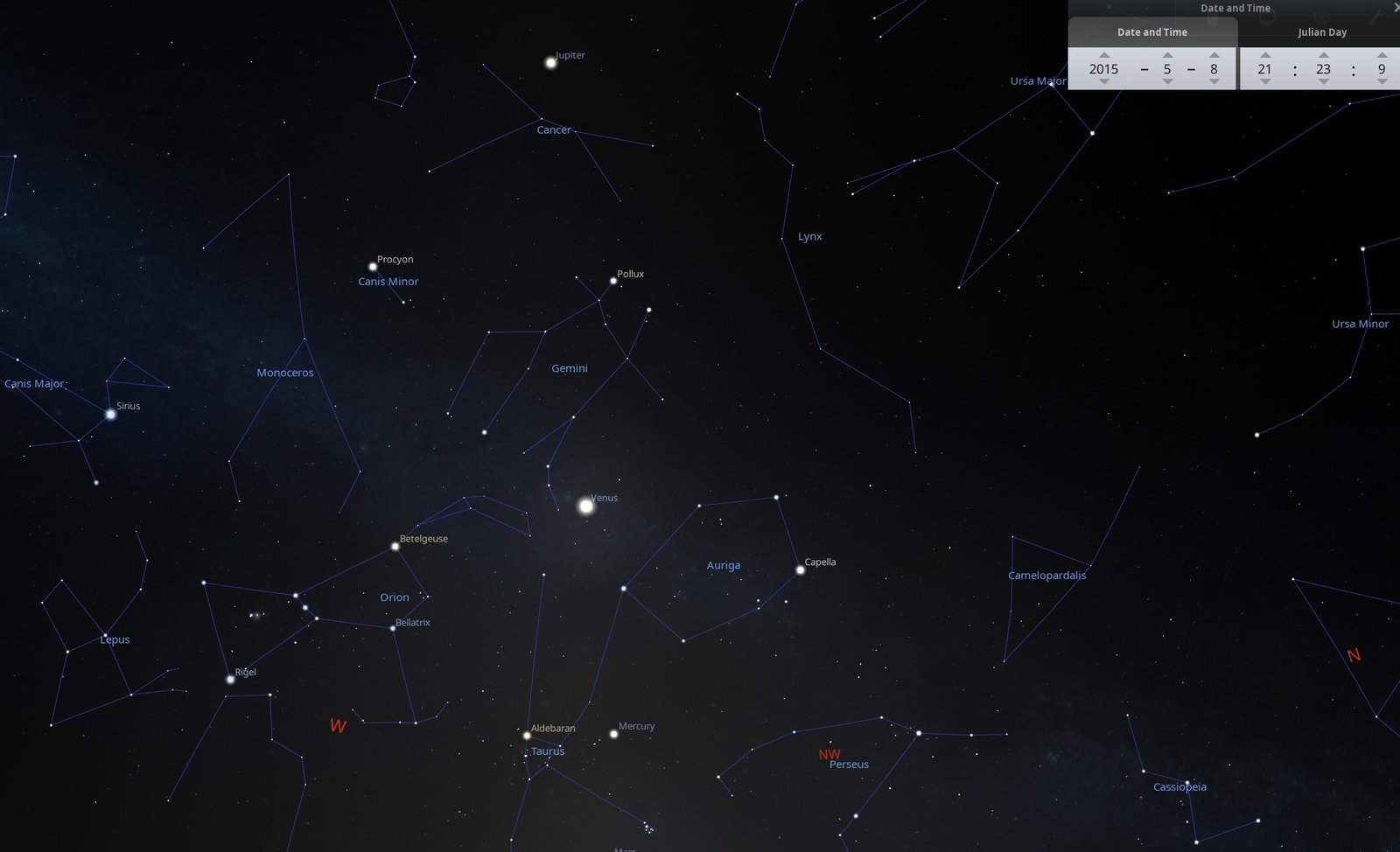
This May 2015 the planets Mercury, Venus and Jupiter will be in near alignment with each other. From Earth’s perspective, the alignment will be visible to the West after sunset. Mercury and Venus are in close alignment and Jupiter is a little off to the left and above Venus.
Moon, Venus, Mars – Conjunction | February 21, 2015
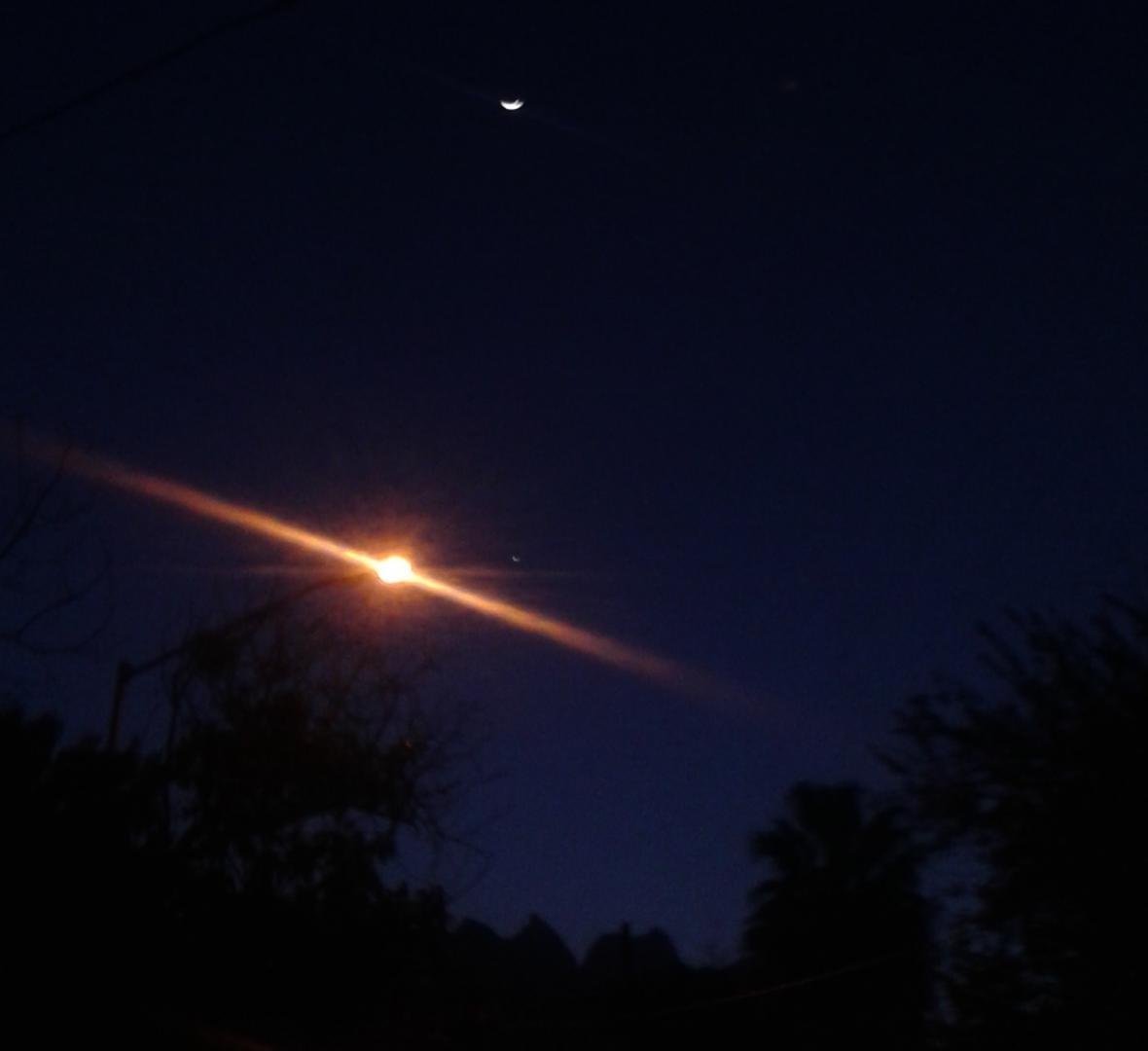
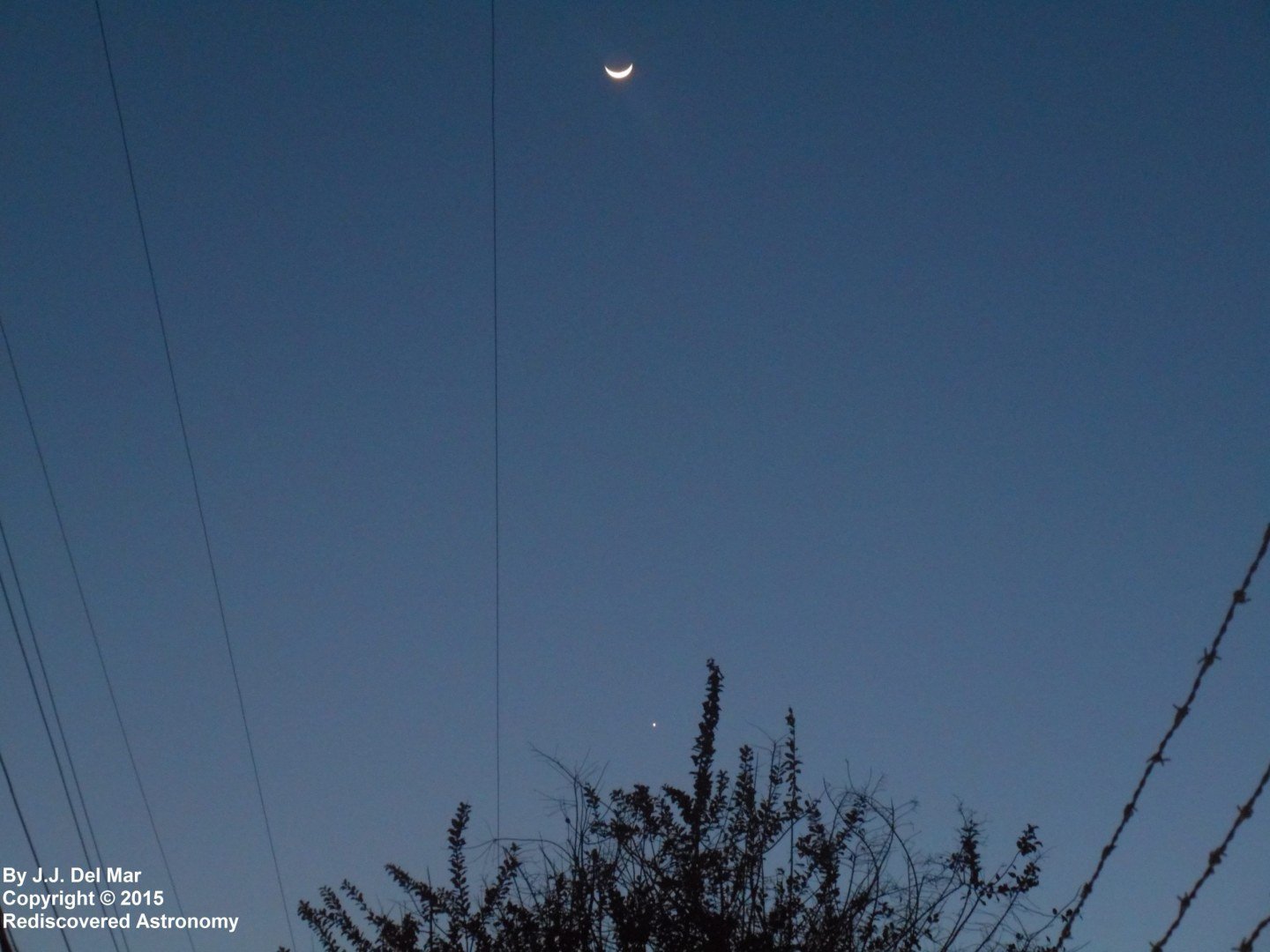
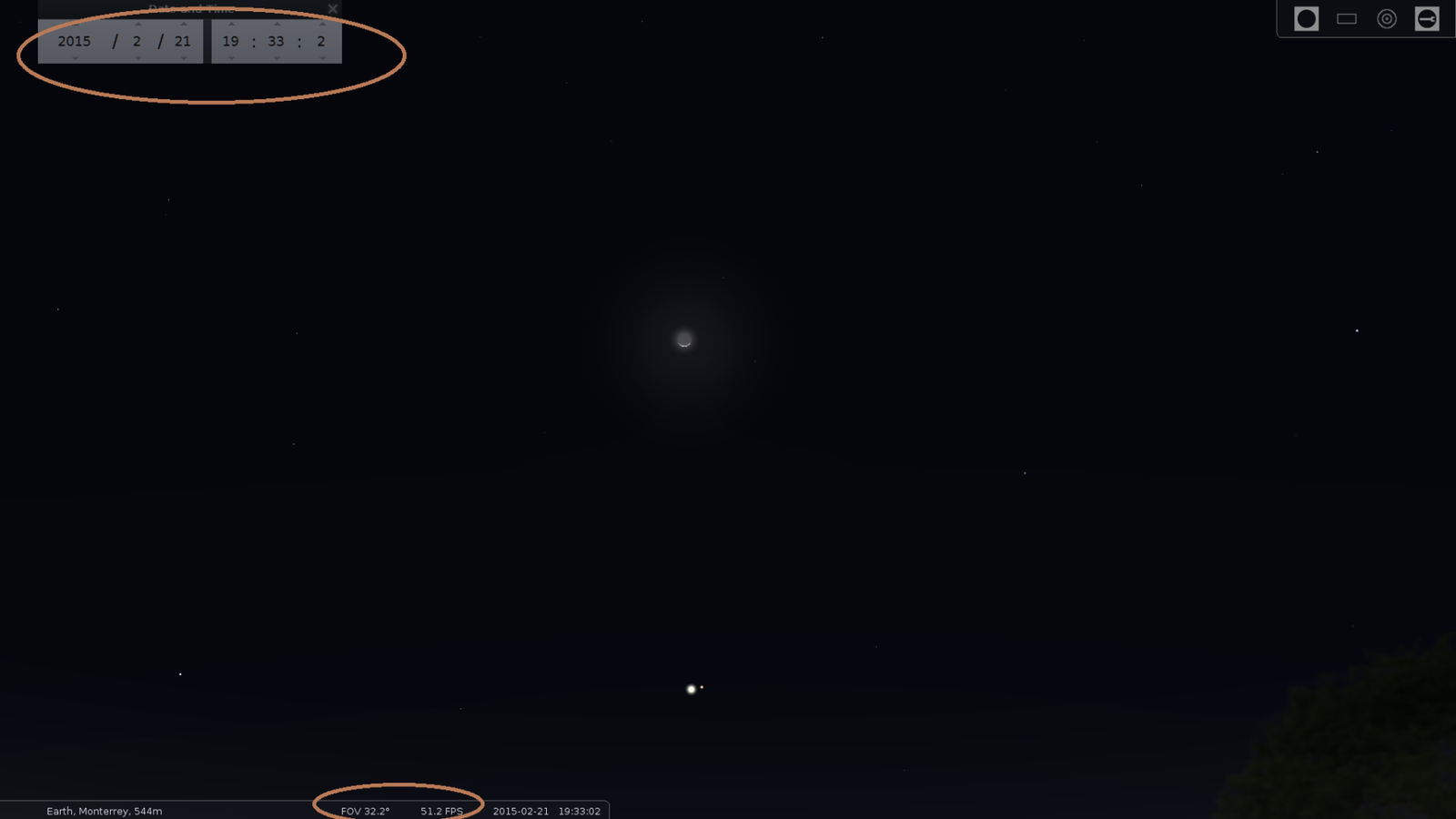
The conjuction of the Moon, Venus, and Mars was highly photographed this February on the 20th of the month and on following days the two planets keep shining in the same area of the night sky. However, on Friday, February 21, 2015 the bright Venus did not allow us to see Mars, too faint in the night sky. It appeared as an occultaion of Mars by Venus to the naked eye.
But we have said before that the interested observer does not need expensive equipment or fancy telescopes to see events like this month’s conjuction. From the use of a simple cellphone to the aid of a pair of binoculars, the night watcher could equally enjoy the view all he/she needs is to know where to watch.
So we set up last week to see the conjuction with different devices you may already have.
Moon, Venus, Mars – Conjunction
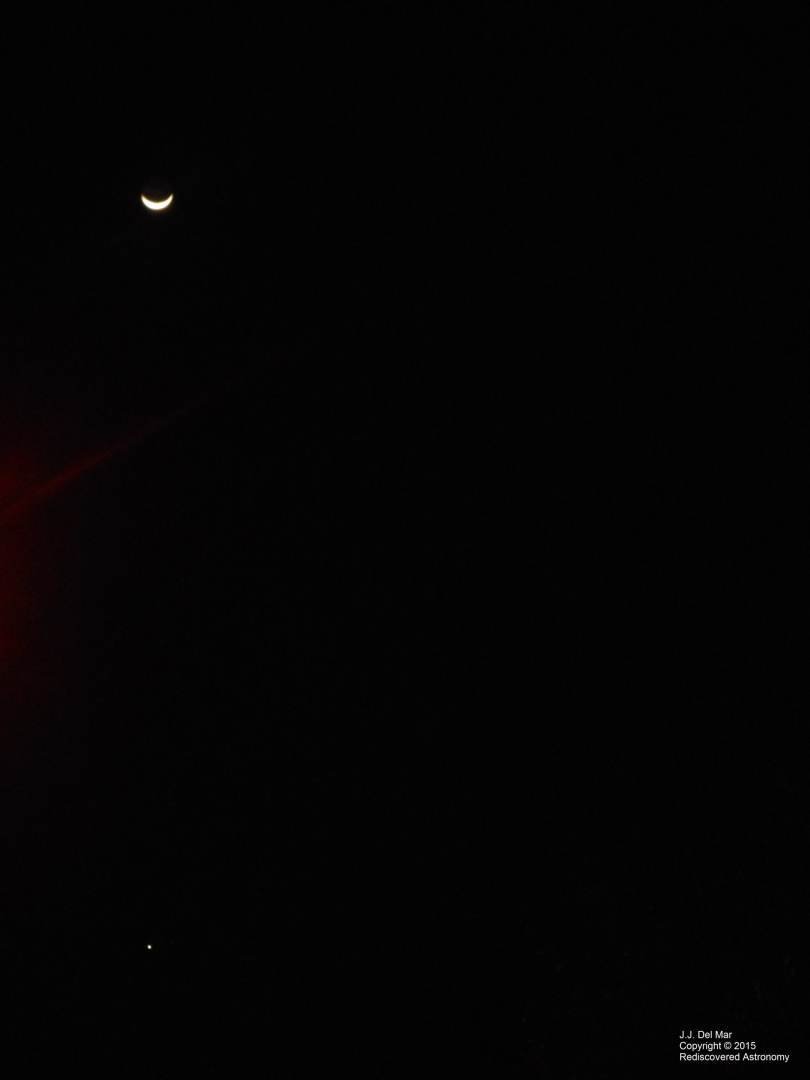
We looked to the West to see the conjuction and took photos with a simple smartphone, Samsung Galaxy. We tried the various settings included with the phone’s camera with different results.
The same as with the naked eye, Venus did not allow us to see Mars with the smartphone camera, but overall the Moon and Venus below it looked sharp.
We first tried the compact Nikon 3600 camera [really unexpensive and cheaper than most smartphones] by using the video camera mode. We just panned and zoomed up to 3x then up to 4x [out of the 6x maximun] to simulate what the naked eye could see. We shot the Moon, Venus, and Mars to the West.
We got a bonus by looking to the East and capture Jupiter on the same take. The use of any video camera would give similar results.
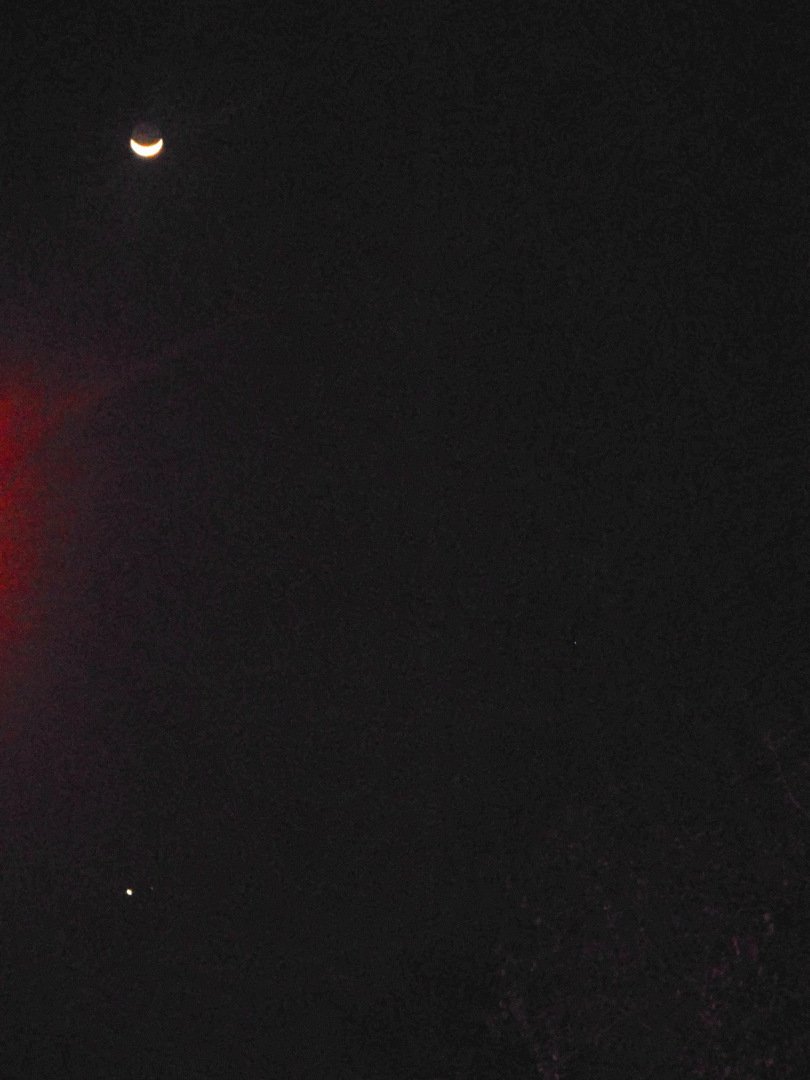
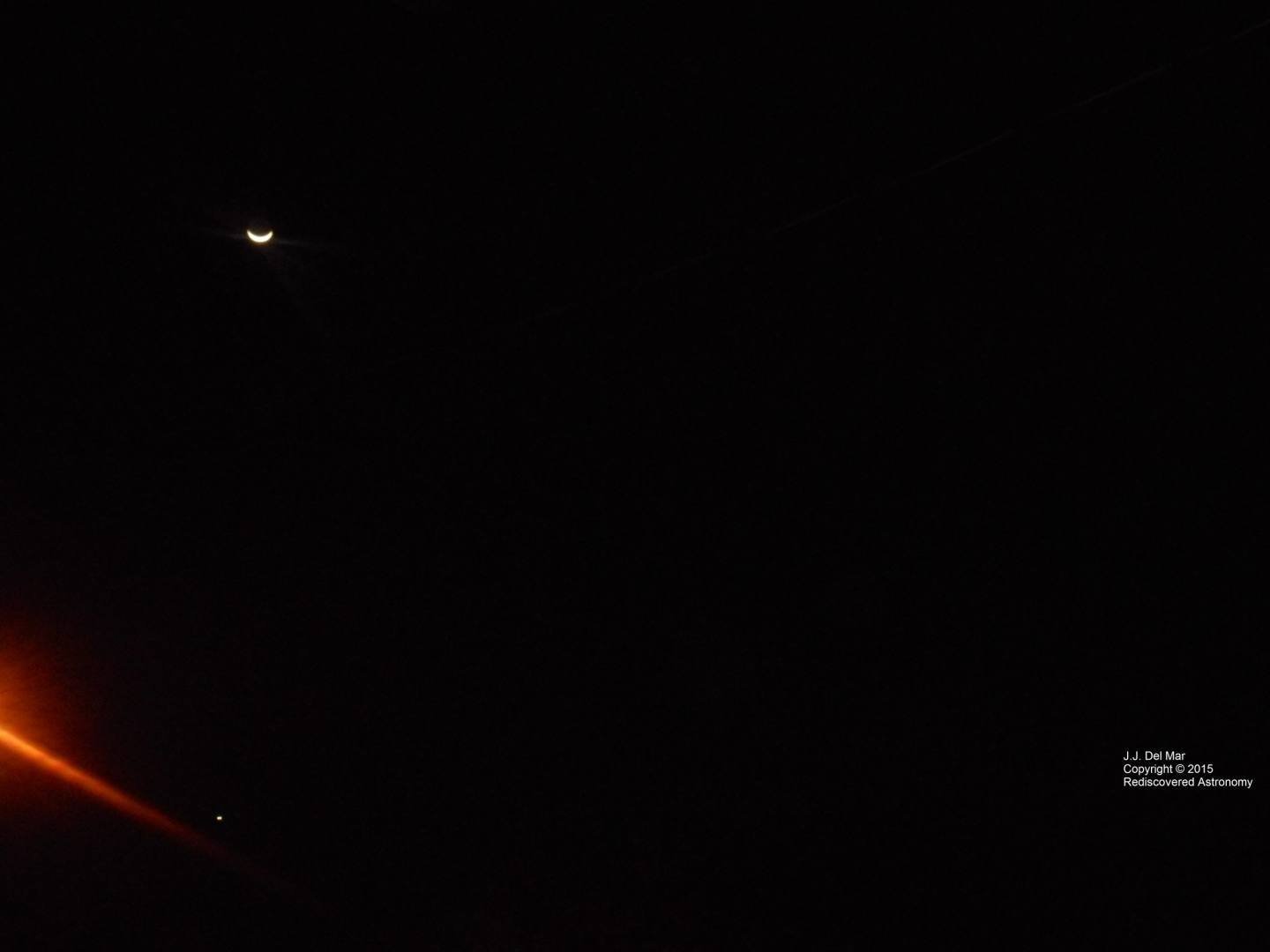
As with the smartphone camera, we tried different settings of the compact Nikon 3600. The following are unedited full resolution images.
We adjusted the exposure of some of the photos to discover Mars.
A failed sub-orbital flight of a Virgin Galactic spacecraft left one pilot dead and one injured. The spacecraft, Space Ship Two, had detached from its carrier plane White Knight which landed safely. Space Ship Two was supposed to achieve sub-orbital flight but the spacecraft experienced anomalies that caused it to crash land. Virgin Galactic had had previous flights of Space Ship Two with no major incidents. But today’s was a tragic one and it is very sad news for the space community.
Tragedy Strikes Virgin Galactic – Space Ship Two Crash Lands | CNN
After the failure of a Falcon 9R in recent days, Space X successfully launched its Falcon 9 rocket carrying the AsiaSat 6 into orbit yesterday morning.
Meteorites In Mexico and Argentina Appear Before Earthquake
Mexico Meteorites
Two meteorites, one over México before an earthquake and another in Argentina were spotted last April the 21st, 2013. These constitute the last in a series of meteorites reported and filmed in the last months, including the one over Russia.These phenomena may point to an increase in the number of rocks falling into Earth’s atmosphere. The cause? Scientists do not agree, but together with the increase in the number of non-periodic comets that are approaching the inner solar system make for an interesting 2013/2014 sky watch. Astronomy Rediscovered will publish an article in the next weeks [May or June] about the probable causes for the increase in Oort cloud comets visiting the sun; that is according to some astrophysicists’ research.
Planetary Resources To Build Public Space Telescope
It makes the news again with their announcement today that they plan to build a space telescope for public access.
The company became known for its intent to mine asteroids, and according to their website that is exactly the primary goal.
With today’s announcement that they’re launching a public space telescope, the company is paving the way for other similar entities to really promote science among the general public. ARKYD is the name of the project for the space telescope and Planetary Resources is aming at raising $1,000, 000 to kick start the satellite. People can make contributions of at least $1 U.S. dollar.
Update 7-9-2013
Planetary Resources did meet the goal of raising at least 1 million dollars to start the project.
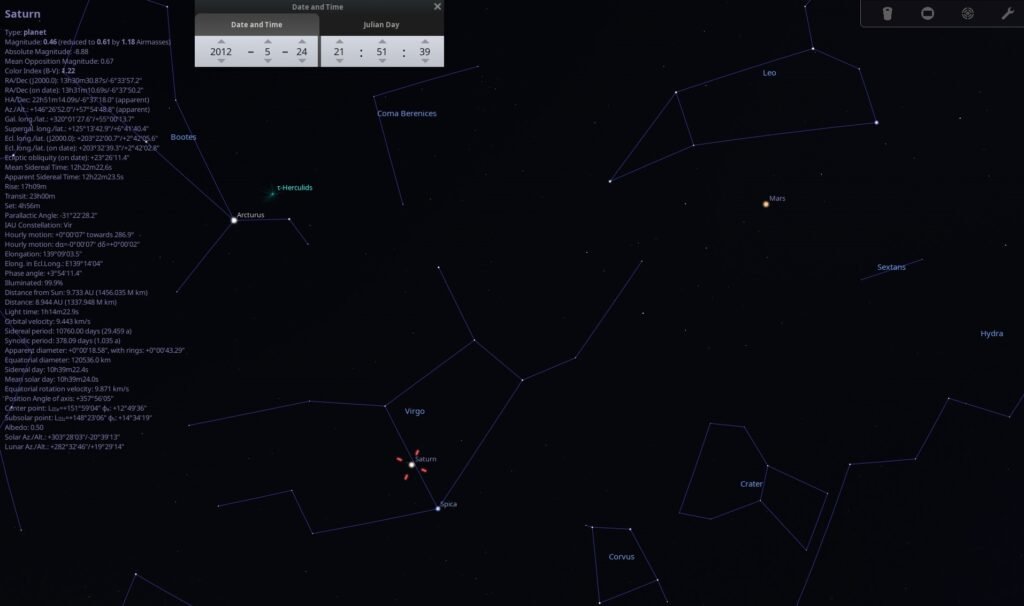
Look Up at the sky tonight you should be able to locate Mars and Saturn in a straight line from Earth’s perspective.
I couldn’t find an available telescope tonight, too bad. Seems I’ll have to acquire my own. But despite what the general public might think, it doesn’t take that much to get hold of a telescope and a digital camera to capture amazing footage of Earth’s companions in the sky.